I Watched 100 People Line Up at 6am for Pickleball. The Real Story Isn't That Tennis Is Losing.
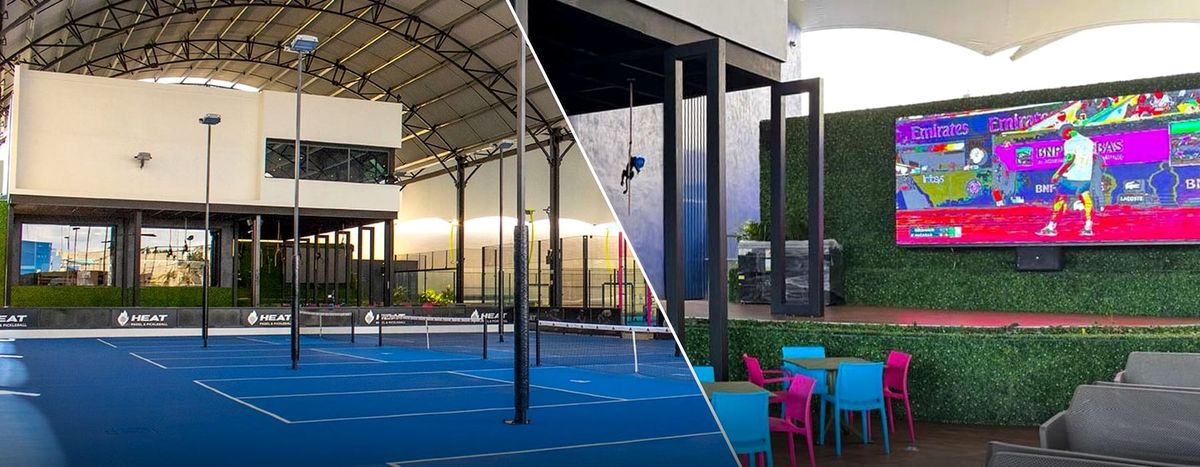
At the start of this year, living in Playa del Carmen, I watched lines nearly 100 metres long form outside a pickleball and padel club at 6am on a weekend, players desperate to get onto the first session of the day, driven by the sheer scale of visitors flying in from the US and Canada for the holiday season. When I moved to Tulum at the halfway point of the year, a different version of the same demand was waiting for me, this time for padel.
I'd always pictured my own return to racquet sports as a return to tennis, the game I grew up playing as a junior. But the demand for padel here was so overwhelming that I found myself outnumbered before I'd even picked up a racquet, and it didn't take much convincing to change my mind. Watching a single rally unfold, a smash, a volley, a lob off the glass, all inside the same point, I was hooked before I even understood the rules. I bought a racquet that same week and haven't stopped since.
What actually struck me wasn't the sport itself, though. It was who I was playing it with. On any given court, I'd find players from Argentina, the UK, Canada, myself Australian, all communicating as best we could across languages, having the best time regardless. I downloaded an app called Playtomic, built a player profile, and could find courts, book times, and pay, all from my phone. New to the area or traveling alone didn't matter. You could book a spot in an open game and the app would fill the other player slots for you, no need to awkwardly ask around a club for extra players. Both facilities I played at in Playa del Carmen had a restaurant and bar built directly into the venue, one even had a golf simulator, built specifically to keep people around once the match itself was over.
The Same Story, a Different Continent
I'm not the only one watching padel move this fast. In England, Sport England data analyzed by The Guardian shows the country has lost 183 tennis courts since 2023, the first documented decline in tennis court stock since at least 2000, while padel courts have grown from 382 to more than 2,200 in the same window. The obvious headline writes itself: Padel is booming, and tennis is paying for it.
Racket Business, a specialist publication covering the racquet sports industry, isn't convinced that's actually the right question. Their analysis points to a statistic that genuinely reframes the whole debate. The LTA estimates that around two-thirds of Britain's one million padel players also play tennis. These aren't two sports fighting over separate audiences. They're substantially the same players, picking up a second racquet, not abandoning their first one.
What Actually Determines Whether a Padel Business Survives
Where Racket Business's analysis gets genuinely sharp is in questioning what happens once padel's current growth phase levels out. Right now, availability alone can carry a business, when courts are scarce, people book whatever's open. That won't last forever. Once supply catches up with demand, the publication argues, the real differentiator won't be who has the newest courts or the cheapest app prices. It'll be community, the same thing that's taken traditional tennis clubs decades to build, and something a converted warehouse on a retail park can't manufacture overnight.
That's exactly what I experienced firsthand in Mexico, just without anyone framing it as a business strategy. The restaurant, the bar, the golf simulator, none of that was incidental. It's the same instinct Racket Business describes. Give people a reason to stay once the match ends, and you turn a court rental into a community someone keeps coming back to. One case study in their reporting backs this up directly, a UK club that converted two tennis courts into three padel courts didn't damage its tennis operation at all. It had its best-ever year for revenue and profit, driven by new members the padel courts brought in.
It's Not Tennis Versus Padel. It's One Padel Business Against Another.
The real tension isn't the sport people choose on a given day. It's which kind of padel venue survives the next five years, the standalone commercial court with nothing beyond the four walls, or the version I stumbled into in Mexico, where the court is really just the entry point into something people want to stay part of. Britain's 183 lost tennis courts make for a dramatic headline. But the more interesting question, on both sides of the Atlantic, is which padel venues are actually building something worth returning to, and which ones are just renting out an hour at a time.
Jake Scudder
Journalist – topics of tennis