
Tennis Has a Temper Problem. How Far Is Too Far?
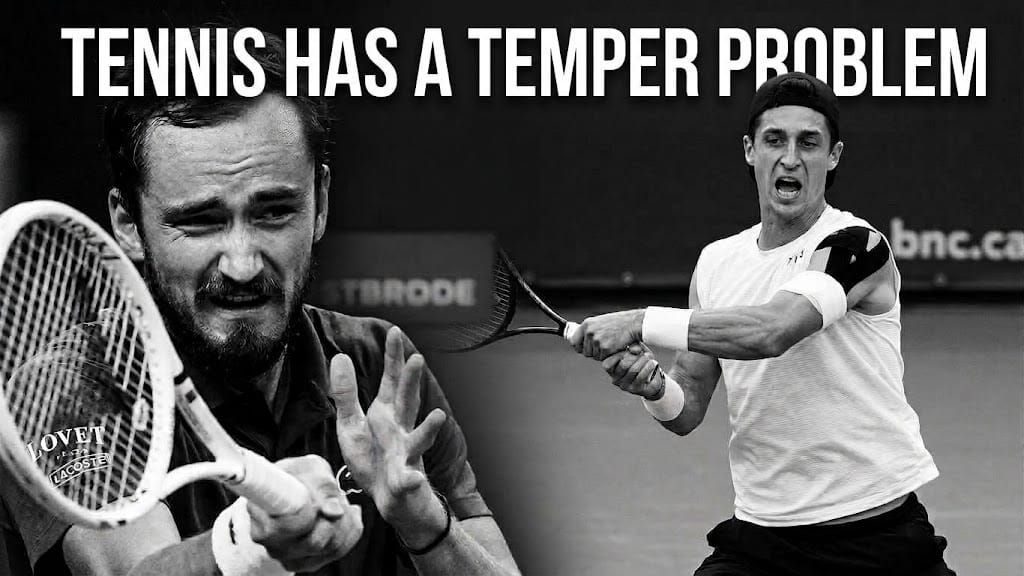
There seems to be something in the water at the moment, because the Asian swing has turned into a bit of a circus over the past month.
Racquets are being smashed, balls are being belted into the stands, ball kids abused, and officials left to pick up the pieces. Tennis has always had its share of emotional outbursts, but two recent incidents raise a pretty important question: at what point does a player's frustration stop being part of the game and become unacceptable?
There is a vast difference between losing your head after a bad shot and putting someone in the crowd at risk. Lately, that line has been getting blurry.
The Shanghai Meltdown
Let's start with Frenchman Terence Atmane, who turned his Shanghai Masters qualifying match against Australia's Bernard Tomic into something resembling a bloke having a very bad day at the pub.
Atmane smashed his racquet against the net, sent a ball flying over the stands, and then hurled his racquet toward the spectators. It was stopped by a railing, narrowly missing fans in the front rows.
We have all had days where nothing goes right. You miss a deadline, spill your coffee, stub your toe on the corner of the bed, and briefly consider whether society is worth participating in. But most of us don't respond by launching our belongings at innocent bystanders.
Atmane was not disqualified. He received a code violation and a point penalty before ultimately retiring down 5-3 in the third set, a broader trend of mid-match retirements that deserves its own examination.
I am not suggesting every racquet smash should end with a player being thrown out. Racquet abuse has been part of tennis for years, and watching someone lose their cool isn't new. But throwing a racquet toward a crowd? That is a different conversation entirely. Those spectators paid good money to watch a tennis match. They didn't sign up to dodge flying equipment.
Medvedev in Beijing
Then came Daniil Medvedev at the China Open.
In his semifinal against Novak Djokovic, Medvedev was trailing 7-5, 5-3 when he hit a ball that had rebounded off the back wall. It flew straight into the front row and struck a spectator in the eye. The fan was helped away holding a hand over his face, and Medvedev was defaulted from the match, costing him both ranking points and prize money.
Medvedev apologized and noted it was an accident, with Djokovic expressing clear sympathy. Djokovic, who was disqualified from the 2020 US Open for hitting a line judge with a ball, noted he felt for Medvedev while hoping the spectator was uninjured.
It is critical to make that distinction. There is a world of difference between deliberately trying to hurt someone and making a reckless decision in a moment of frustration. But the consequences for the person on the receiving end remain serious regardless of intent. Imagine settling into your seat to watch two of the world's best, only to require medical attention because someone lost their temper.
Are the Punishments Consistent?
This is the central dilemma: Atmane threw a racquet toward spectators and stayed in the match; Medvedev accidentally struck a spectator with a ball and was defaulted.
The situations are not identical, and we shouldn't pretend they are. Contact occurred in Beijing, whereas the racquet missed in Shanghai. Historically, tennis officiating has treated the physical result as the boundary line, contact triggers the default, regardless of intent. The penalty follows the outcome.
The real question is whether that remains the right standard. A racquet thrown toward a crowd is dangerous long before anyone gets hurt, and officiating rules shouldn't wait for an injury to take safety seriously.
Tennis already possesses rules covering unsportsmanlike conduct, racquet abuse, and dangerous behavior. The issue is whether enforcement is strong, clear, and consistent enough to deter players before things escalate. If players know that throwing equipment anywhere near a crowd results in immediate disqualification, they might hesitate.
Passion Versus Recklessness
No rulebook can guarantee complete emotional control. Professional athletes operate under immense pressure, and intense emotion is part of what makes live sport compelling. Nobody wants a tour where players resemble rehearsed corporate spokespeople.
What isn't acceptable is allowing that frustration to compromise safety.
These moments draw scrutiny because they are alarming, though they do not mean tennis is suddenly a violent sport. Even so, dangerous conduct deserves more than a shrug and a wave of the hand about player passion. Officials need to establish that reckless behaviour carries strict consequences whether or not someone ends up injured.
Should throwing a racquet toward the crowd trigger an automatic disqualification regardless of contact? Or should officials retain discretion based on individual match circumstances?
Jake Scudder
Journalist – topics of tennis