The US Open Can't Seem to Keep Play Undisturbed This Year
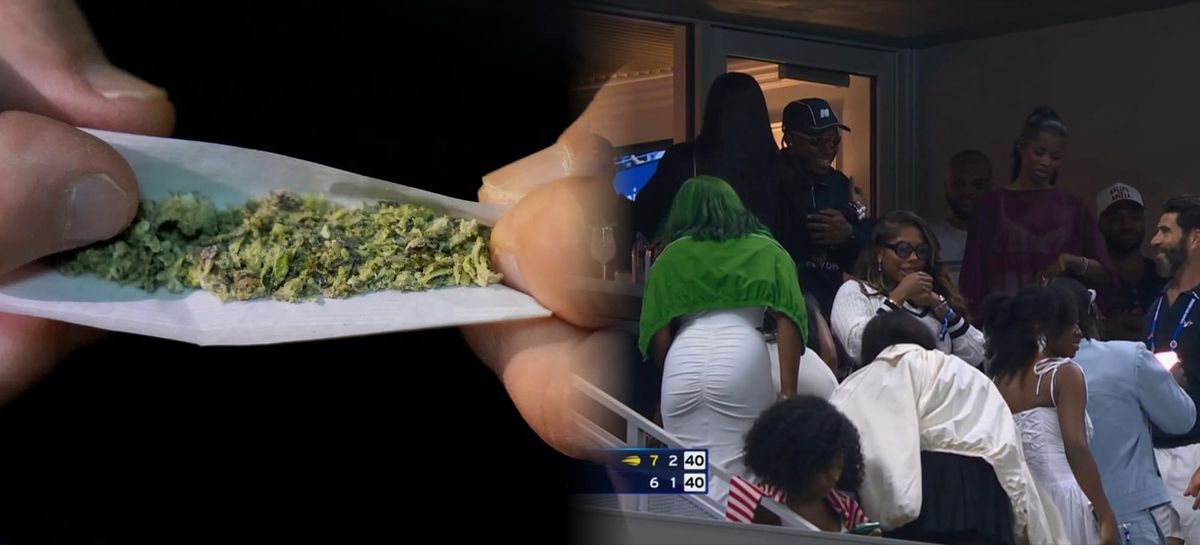
Two very different distractions have disrupted matches at this year's US Open, and together they say something real about the tension running through the tournament right now, one it can't control, and one it created deliberately.
The One They Can't Control
Cannabis smell drifting in from neighboring Corona Park has become a recurring complaint at Flushing Meadows, and this year is no exception. British No. 1 Katie Boulter didn't hold back: "I'm trying to focus and then obviously, it takes you out of the moment and you really don't want to. You don't need distractions." Fellow Brits Fran Jones and Harriet Dart both raised it too, Jones recalling joking about it with an official during a previous year's match, Dart shrugging it off as simply New York. The USTA says it remains "vigilant" but has been direct about the limits of its actual power here: cannabis is legal for adults in New York State, and the smell originates outside tournament grounds it doesn't control.
This isn't new. Casper Ruud called it the "worst thing" about playing in New York last year. Nick Kyrgios complained about it affecting his asthma back in 2022. Maria Sakkari and Alexander Zverev raised it in 2023, Zverev memorably comparing Court 17 to "Snoop Dogg's living room." This is now at least the fourth consecutive year the issue has surfaced, a problem the tournament genuinely can't fix through policy, since it isn't happening on its own property.
The One They Chose
The second distraction is a different story entirely, because the USTA invited it in on purpose. A group of influencers staged a photoshoot with bright ring lights during Naomi Osaka's first-round match against Anastasia Zakharova, disruptive enough that chair umpire Kader Nouni had to stop play and address them directly over the stadium microphone: "Guys, please, in the suite behind me, please take your seat." A similar incident disrupted Madison Keys' match against Alina Korneeva.
Player reaction has been pointed but measured. Jessica Pegula: "I can appreciate the influencers coming and kind of showcasing the U.S. Open experience. But I do think that it's tough when you see videos like that... People are down there trying to perform, and it's their career and their job. It seems like a bit disrespectful. I think it's gotten a little maybe too much." Osaka herself urged influencers to "read up" on the sport's rules for spectators. Daniil Medvedev was more measured, noting players can flag it to the umpire when it genuinely disrupts a point.
This didn't happen by accident. The USTA credentialed roughly 100 content creators for this year's tournament, part of a deliberate strategy that also included a sanctioned collaboration with MrBeast, whose channels reach more than a billion subscribers combined, filming a "Giant Tennis" video with Frances Tiafoe umpiring. That partnership was planned, controlled promotional content. The courtside disruptions during actual competitive matches are the uncontrolled version of the same underlying strategy.
It's Not Just the US Open, But It Is Different Here
Influencer culture isn't unique to Flushing Meadows. Wimbledon has its own version, courtside fashion, "tennis WAG" influencers like Morgan Riddle, and paid creator appearances. Bryan brothers doubles player Mike Bryan put it bluntly: "A lot of these tournaments now just have influencers. They actually pay influencers to come to the tournament and post things about the tournament, so that's part of the game now... are they really watching the match, or are they trying to make their channel look better?"
The real difference is what happens once play actually starts. Multiple reports on the Osaka incident noted that "stricter rules are still followed at Grand Slams like Wimbledon and the French Open, where no one talks or even moves during a point, and the entire stadium is locked onto the ball." Wimbledon's influencer presence lives mostly around the match, in the stands, in the fashion, in the culture. What's happening at the US Open is different in kind: creators disrupting live points themselves, badly enough that an umpire has had to stop play and intervene directly, twice in a matter of days.
The Same Tension I Already Flagged
This is the exact friction I wrote about when the ATP launched its Talent Summit last week, tour organizations are actively building formal infrastructure to bring creators inside the sport, betting on reach and new audiences. What's happening at the US Open right now is that bet playing out in real time, and not entirely cleanly. A credential system built for reach doesn't automatically come with the etiquette or judgment court-level access has always assumed. The weed smell is a problem the US Open inherited from its neighborhood. The influencer disruptions are a problem it invited in, and now has to actually manage.
Jake Scudder
Journalist – topics of tennis