The US Open Has Never Paid Players More, or Charged Fans More, Than It Does Right Now
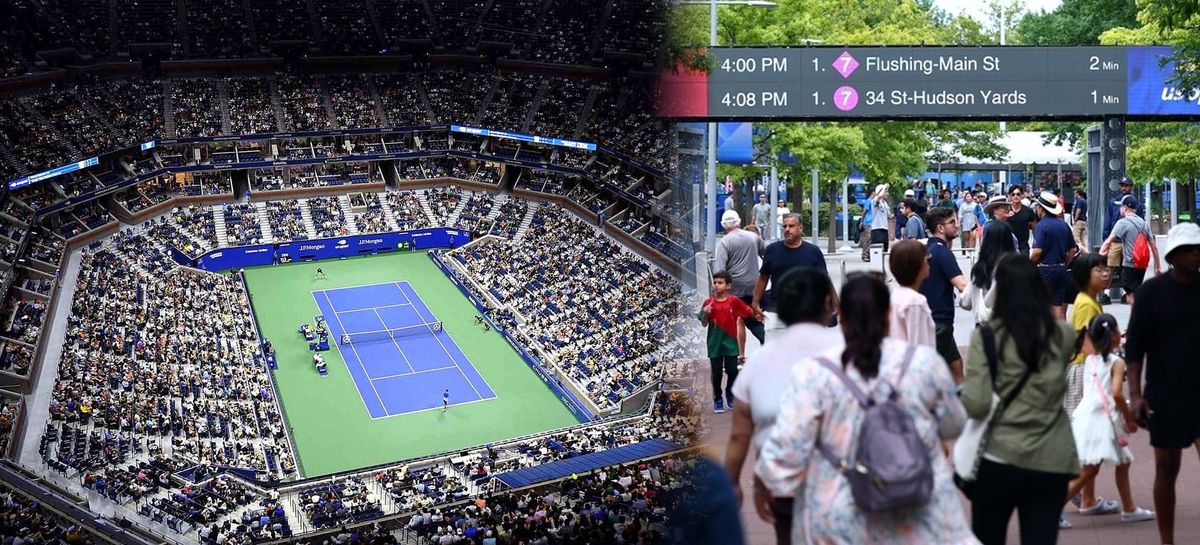
The 2026 US Open is handing out more prize money than any Grand Slam in history. It's also become harder and more expensive than ever for an ordinary fan to actually get into the building. Both things are true at the same tournament, in the same year, and they're worth looking at together.
What It Costs to Watch Now
Ticket prices at this year's US Open have become a genuine flashpoint, and the resale market is where most of the pain sits. Face-value grounds passes run $65 to $135 depending on the date, well within reach of an ordinary day out. Almost none of them are still being sold at that price, though. The primary market largely cleared back in May, and what's left is resale, running well above last year's prices by most recent readings, though the exact margin has moved around day to day as the tournament approaches.
Demand has been extreme enough that one prospective buyer shared a screenshot showing over 430,000 people ahead of them in the virtual queue for men's final presale tickets, for a stadium that seats roughly 23,000. Resale listings for the men's singles final have reached as high as $30,000. Billionaire investor Bill Ackman publicly criticized a $363 resale grounds pass price on X, asking how it squared with the USTA's stated mission to promote the sport.
The Mayor's Response
Against that backdrop, New York City Mayor Zohran Mamdani has secured 1,000 tickets priced at $100 each, set aside specifically for city residents with a verified NYC zip code, covering main draw matches between August 30 and September 8, running through the quarterfinal stage. Unlike some of Mamdani's other ticket-access programs this year, a lottery for 2026 World Cup tickets and a Broadway ticket lottery for high school students, the US Open allocation is being distributed first-come, first-served, with sales opening at 10am ET.
"This summer, we have shown again and again that sports belong to the people," Mamdani said in a statement. "From the World Cup to track and field championships, we have opened stadium doors to some of the biggest sporting events in the world so more New Yorkers can enjoy them. Today, we are doubling down on that work by making the US Open more affordable for New Yorkers."
It's worth being honest about scale here. Against a presale queue reportedly over 430,000 people deep, 1,000 tickets is a small fraction of actual demand. It won't meaningfully move the broader pricing picture. What it does do is guarantee a fixed, affordable entry point for a small number of local fans who'd otherwise be priced out entirely, and it continues a pattern Mamdani has now repeated across three of the city's biggest sporting and cultural events this year alone.
The Other Side of the Ledger
While tickets get harder to afford, players have never been paid more to be there. The USTA has announced a total prize purse of $108 million for 2026, officially the largest in Grand Slam history, ahead of Wimbledon's $86.1 million, the Australian Open's $79.9 million, and the French Open's $72 million. Singles champions will each take home $5.5 million, the highest winner's check in major tennis history, and even a first-round main draw loser now earns $140,000, also a record at that stage.
The increase, 20% up from 2025 and 44% higher than 2024, comes directly after top players, including Novak Djokovic, Coco Gauff, Aryna Sabalenka, and Jannik Sinner, signed a letter earlier this year pushing the four majors for a larger share of tournament revenue.
Two Records, One Tournament
Put together, the picture is genuinely stark. The people playing the US Open this year will be compensated more than any Grand Slam field in history. The people trying to watch them are paying resale prices running well above what they cost even a year ago, with demand so extreme that hundreds of thousands of fans didn't even make it through the queue for a final ticket. Mamdani's 1,000 tickets don't close that gap. They're a small, deliberate exception carved out inside a market otherwise moving hard in the opposite direction.
Jake Scudder
Journalist – topics of tennis