
Coleman Wong Is Hong Kong's Best Tennis Player Ever. His Funding Almost Didn't Survive Long Enough to Prove It.
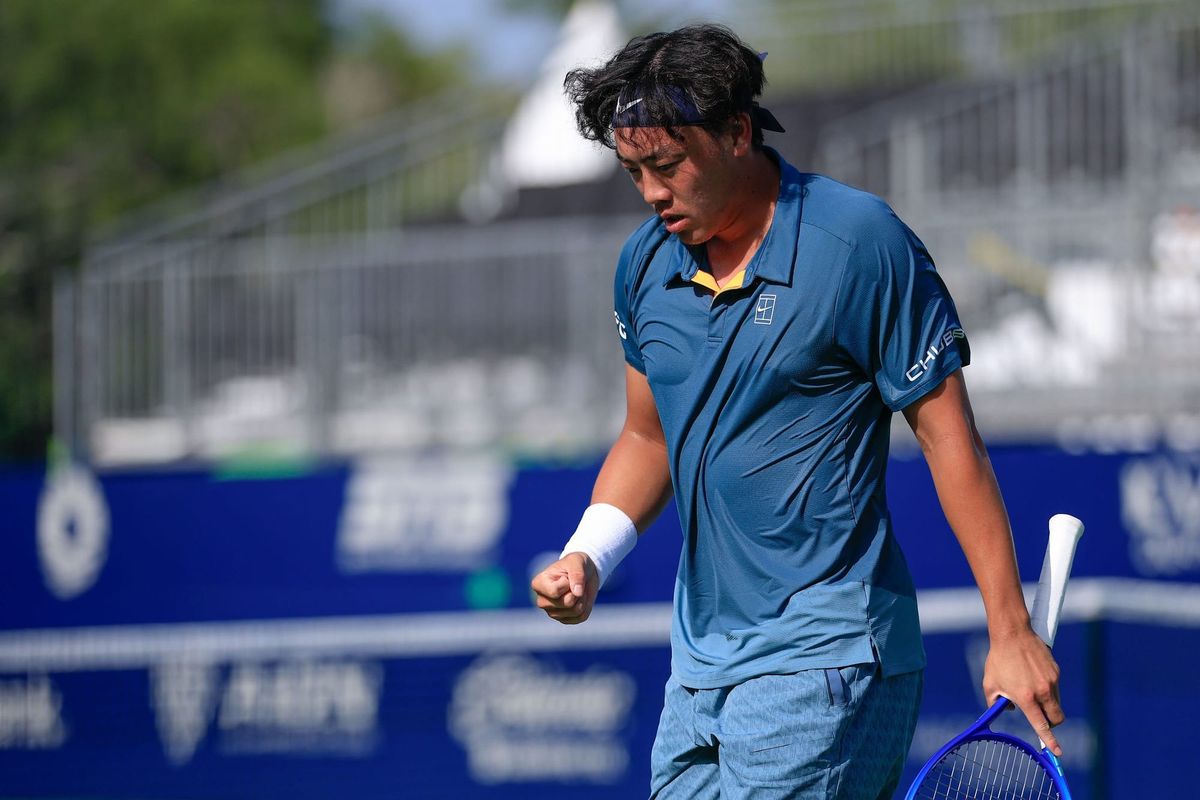
I'm here on the ground this week covering the ATP Challenger 125 in Cancún, and Coleman Wong was a player I was very much interested in covering. As a tennis business publication first, it wasn't just his results that intrigued me, it was his story. Wong nearly quit tennis entirely during the Covid lockdowns, and years later, the public funding system that helped him become Hong Kong's best-ever tennis player nearly got cut too. Both nearly-endings are part of the same story, and neither gets told together often enough.
Nearly Quitting, Then Nearly Losing the System
Wong's own story starts with almost walking away. "I was thinking to actually stop tennis during Covid because it was just too tough," he told ATP Tour. His parents suggested university instead, unsure how long the disruption would last. He stayed with the sport anyway, and the results since have been genuinely historic for Hong Kong, first man from the city to reach a Grand Slam main draw in the Open Era, first to win a Grand Slam singles match, first to beat a Top 15 player at Masters 1000 level, when he knocked out then-No. 14 Ben Shelton in Miami.
What most coverage of Wong misses is that Hong Kong tennis itself nearly lost the funding tier that made his development possible in the first place. Hong Kong sport operates on a tiered public funding system through the Hong Kong Sports Institute, and tennis only returned to Tier A status in 2013. That status was reportedly at real risk of being cut before Wong's Miami Open run, beating Daniel Altmaier and then Shelton, became part of the case for keeping it.
Wong himself has been direct about what that funding actually means in practical terms. "It makes a huge difference because obviously I have my coach, my physio, and a lot of hotels and expenses," he said. "Public cash is crucial to athletes' security, it motivates me even more."
The Three Building Blocks
Michael Cheng Ming-git, president of the Hong Kong, China Tennis Association, has been explicit about the actual strategy behind Wong's rise, and it's a genuine business framework, not just talent development. "Tennis is one of the sports in Hong Kong that can be industrialised, commercialised and professionalised," Cheng said. "You need three building blocks. Events, infrastructure, and elite and development pathway. They all go hand in hand."
The events piece is real and measurable. Hong Kong now hosts an ATP 250, a WTA 250, and a WTA 125 every year, making it only the third Asian city to host both ATP and WTA tournaments. Wong made his home ATP debut at the Hong Kong Open, at the same venue, Victoria Park, where he first picked up a racquet as a five-year-old substituting for his sick older sister's lesson.
Depth, Not Just One Player
The clearest evidence the system is working isn't Wong alone, it's who else is coming up behind him. Cheng has pointed specifically to Kai Thompson on the men's side, and to Eudice Chong, who broke into the world's top 100 in doubles and won a WTA event in the Philippines, and Cody Wong, also progressing on the women's side. "Having two, three players makes a difference so that you're not relying on just one player," Cheng said.
That's the actual infrastructure argument in practice. A single breakout star can happen anywhere, on raw talent and persistence alone. A pipeline producing multiple players across both tours at once is what a functioning development system actually looks like, and it's exactly what Hong Kong appears to be building, years after almost losing the funding tier that made it possible.
Jake Scudder
Journalist – topics of tennis