Roland-Garros Has Mastered the Art of the Home Wild Card. The Rest of the Grand Slams Should Take Note.
The FIFA World Cup gets underway in less than a fortnight, and for French sports fans the timing could not feel more apt.
Before the nation turns its attention to North America, Paris has been offering a glimpse of what a new generation of French talent looks like—and it has arrived from an unlikely direction.
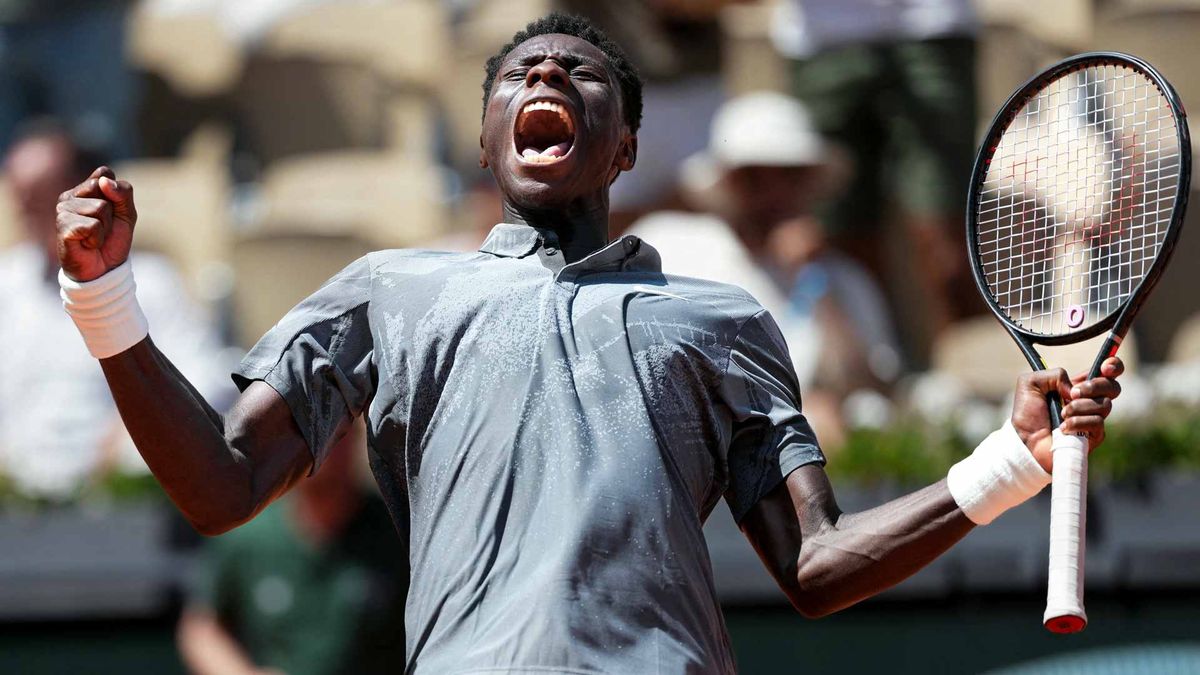
Browsing through the Roland‑Garros schedule the other day, I stumbled across the second‑round match between Moïse Kouamé and Adolfo Daniel Vallejo. Within minutes, I had stopped scrolling. Through the screen, the atmosphere inside Court Suzanne‑Lenglen sounded less like a tennis match and more like the Parc des Princes on a Champions League night. The chants were unified, relentless, and unmistakably Parisian. France had found its man, and perhaps, after bidding farewell to Gael Monfils at his final Roland‑Garros, its next one.
Kouamé, a 17‑year‑old from Sarcelles handed a wild card by the Fédération Française de Tennis, had no business being in the third round of a Grand Slam. Ranked 318th in the world, he was playing only the first major of his career. And yet there he was, battling Vallejo through five sets and four hours and fifty‑six minutes, eventually prevailing in a final‑set tiebreak to become the youngest man to reach the third round of a major since Rafael Nadal in 2003. His run ended in the third round against Alejandro Tabilo, but by then the story had already been written.
A Familiar Script
What struck me was not simply the result. It was how familiar it felt.
Twelve months ago, Roland‑Garros produced an almost identical script, and it came from the women’s draw. Loïs Boisson, a 22‑year‑old from Dijon, arrived in Paris ranked 361st in the world, carrying a wild card and a story that had already captured French hearts before she struck a ball. She had been awarded a wild card for the 2024 edition, only to tear her ACL one week before the tournament began. A nine‑month recovery followed. When she finally walked out onto the Philippe‑Chatrier clay in 2025, the crowd was already hers.
She did not waste the moment. Boisson took down Jessica Pegula, the third seed, then Mirra Andreeva, the sixth, to become the first French woman since Marion Bartoli to reach the Roland‑Garros semifinals. The atmosphere she generated matched anything the tournament had seen in years. When Coco Gauff, in one of the more candid post‑match remarks of the season, admitted she had been chanting her own name to herself during the match simply to drown out the noise, it said everything about the environment Boisson had created.
Strategy, Not Coincidence
Two consecutive years. Two French wild cards. Two moments that stopped the tennis world and dominated global coverage for the better part of a fortnight each. That is not coincidence. That is strategy.
The Fédération Française de Tennis has quietly become the most sophisticated operator in Grand Slam tennis when it comes to the wild card as a commercial instrument. Where other tournaments treat wild cards as goodwill gestures, handed to ageing former champions or promising juniors with little expectation of a deep run, the FFT has developed an eye for identifying French players who are ready to perform on the biggest stage even if their ranking does not yet reflect it. The returns, when it works, are enormous.
Consider what a homegrown wild card run actually delivers. It fills the stadium with a different energy, one that casual spectators and die‑hard fans alike respond to. It generates broadcast moments that money cannot buy—the kind of unscripted, emotionally raw television that drives viewers to stay on a channel well past their bedtime. It dominates the French sports press for days, driving ticket demand and social media engagement simultaneously. And it gives sponsors a storyline to attach themselves to that feels authentic rather than manufactured.
Roland‑Garros Advantage
Roland‑Garros operates in a uniquely advantageous position. It is the only Grand Slam held in a country where tennis occupies genuine mainstream cultural space, where a French player reaching the second week is front‑page news rather than a footnote. Wimbledon has tried and largely failed to generate the same energy around British wild cards. The US Open and the Australian Open have their moments, but the infrastructural passion—the willingness of a Paris crowd to transform a tennis match into something resembling a football stadium—is specific to Roland‑Garros, and the FFT knows it.
What Kouamé and Boisson represent, beyond their individual stories, is proof of concept. The model works. Find a French player on the cusp, give them the opportunity, and trust that the crowd will do the rest. The commercial upside—in broadcast narratives, in sponsor value, in the simple fact that neutral tennis fans around the world tuned in and kept watching—is significant and largely unquantified.
A Formula Worth Studying
As Paris prepares to shift its sporting attention to the World Cup, it is worth pausing on what Roland‑Garros has built. The other Grand Slams have larger prize funds, bigger global audiences, and in some cases more storied histories. But none of them has cracked the formula for turning a wild card into a commercial event quite like the French Open has. That is an edge worth studying.
Jake Scudder
Journalist — topics of tennis