The Price of Principle How the WTA Learned to Follow the Money
In November 2021, the Women's Tennis Association did something almost no sport's governing body has ever done. It put its money where its mouth was.
When Chinese tennis star Peng Shuai disappeared from public view after accusing a retired Communist Party vice premier of sexual assault, her original post was censored within minutes and her name scrubbed from Chinese search results. The WTA didn’t issue a carefully worded statement, convene a task force, or quietly wait for the storm to pass. It pulled out of China entirely. All tournaments. All prize money. All broadcast deals. Gone.
It was a genuine act of moral courage. And it cost the organisation a fortune.
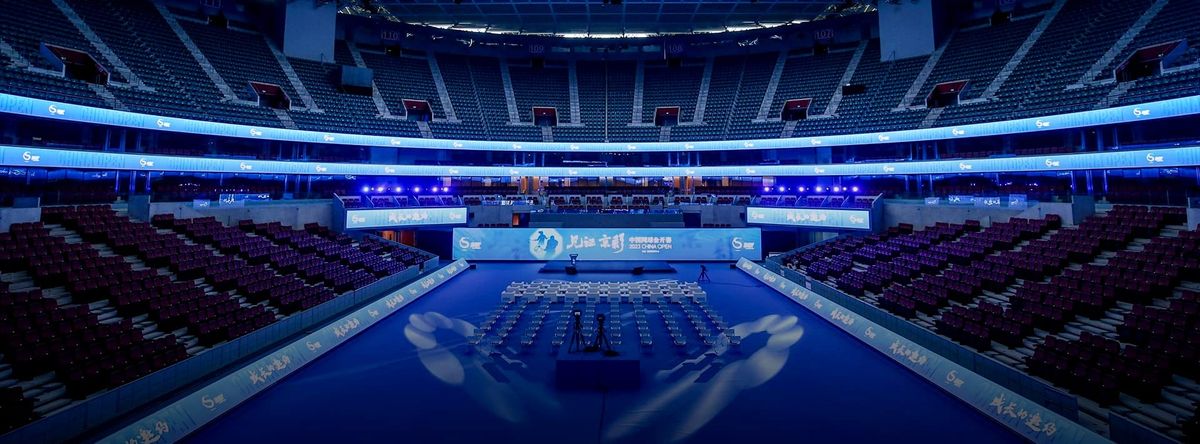
For two years, the WTA operated without one of the most lucrative parts of its calendar. Beijing and Wuhan stood as marquee events that generated hundreds of millions in revenue, sitting empty. Players lost prize money. Sponsors grew nervous. The tour lurched through hosting crises, staging its 2022 Finals in Fort Worth, Texas and its 2023 edition in Cancun, Mexico. Neither could match the scale or spectacle of what China had delivered.
Then, in 2023, the WTA came back.
The stated justification was that the organisation had received “assurances” from Chinese authorities that Peng was safe and well. There had been no independent verification. No direct access. No public appearance by Peng herself at a tournament, presenting a trophy, or speaking freely to international media. Just assurances from the same government that erased her original post and stage‑managed her subsequent appearances for state television.
Where is Peng Shuai today?
Nobody outside China seems to know. As recently as March 2025, human rights advocates and tennis journalists were still asking that question, still getting no meaningful answer. The WTA’s stance remains unchanged: assurances, but still no direct contact.
And yet the China swing is back on the calendar. Beijing. Wuhan. Packed draws, big prize money, the tour’s top players competing in front of tennis‑starved crowds. Business as usual.
If the China return was uncomfortable, what followed was extraordinary.
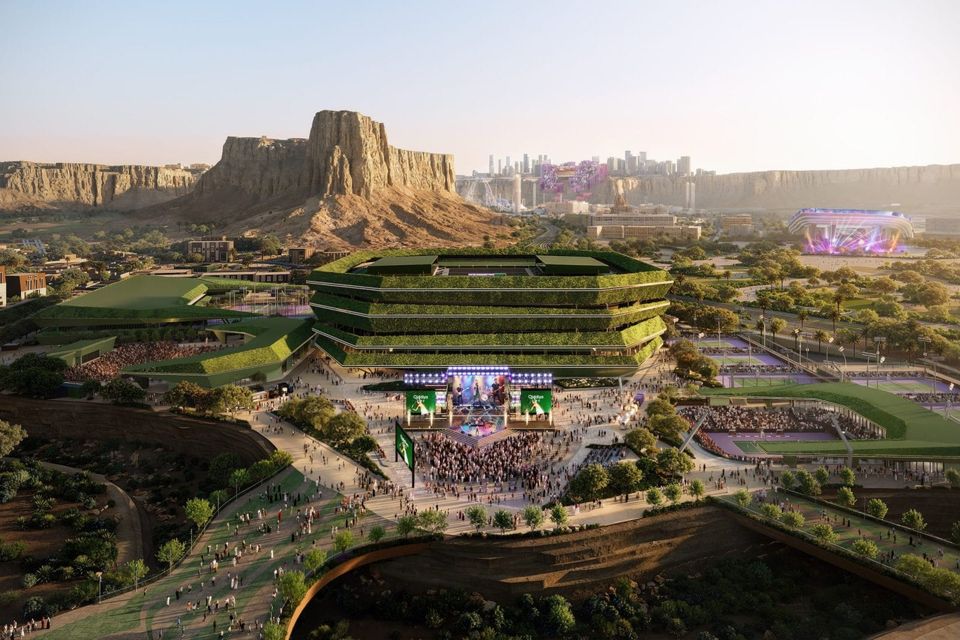
In April 2024, while Peng Shuai’s whereabouts remained unclear and her allegations uninvestigated, the WTA announced that its season‑ending Finals, the crown jewel of the women’s tour, would move to Riyadh, Saudi Arabia. The three‑year deal promised record prize money of $15 million for the inaugural edition, a 70 per cent increase compared to Shenzhen in 2019 ($9 million).
The WTA called it “an exciting new opportunity” and “a positive step for the long‑term growth of women’s tennis as a global and inclusive sport.” Tennis legends Chris Evert and Martina Navratilova wrote an op‑ed in The Washington Post opposing the deal. They raised Saudi Arabia’s record on women’s rights and LGBTQ+ rights. Steve Simon, who was WTA CEO at the time, acknowledged that there were “big issues,” yet he signed the contract anyway.
The argument made in defence of both decisions—China and Saudi Arabia—follows the same logic. Money raised from these deals funds prize money growth across the entire tour. It lifts salaries for players ranked 50th, 80th, 100th in the world who struggle to make a living. It supports the WTA’s broader ambition to achieve pay parity with the men’s game. You cannot grow women’s tennis on principle alone.
That argument is not without merit. The financial reality of women’s professional sport is genuinely difficult. The WTA does not have the luxury of the NBA or the English Premier League. Every dollar matters.
But consider what the WTA had said, implicitly, by leaving China in 2021. It said there are things more important than revenue. It said the safety and freedom of players matters more than market access. It drew a line and held it for two years at enormous cost.
Then it crossed it. Twice.
The Saudi chapter now has a final chapter of its own.
The WTA Finals will leave Riyadh after this year’s edition, with Charlotte, North Carolina reportedly emerging as the leading candidate for 2027. The reason for the departure is telling: it was the Saudis who decided not to renew, not the WTA. The WTA’s own chief executive, Portia Archer, told The Athletic last November that she would have “enjoyed being here for even longer.” It was Saudi Arabia’s sovereign wealth fund that concluded the deal “did not make financial sense.”
In other words, the organisation that once walked away from China over a matter of principle was prepared to stay in Riyadh indefinitely. It took the other party to end it.
What does this pattern tell us? It tells us that the WTA’s 2021 stand, brave as it was, was not built on an institutional commitment to human rights that could survive sustained financial pressure. It was a moment—significant and admirable—that eventually gave way to the same forces that govern every major sports body in the world: the need to grow, to compete, to survive.
That is not a comfortable conclusion. The players who supported the China boycott, the fans who admired the WTA for taking that stand, the human rights organisations that praised Steve Simon—they deserved better than to watch the tour pivot from Beijing to Riyadh and call both moves progress.
There is a harder question lurking underneath all of this, one that applies to every sport currently negotiating with sovereign wealth funds from authoritarian states: what is a principle worth if it has a price?
The WTA found out. In China, the price was two years of lost revenue. In Saudi Arabia, it turned out there was no price at all, just an open door, a record cheque, and a CEO who wished she could stay longer.
Peng Shuai’s question remains unanswered. The WTA Finals will find a new home next year. And the tour will carry on, richer and more conflicted than ever, searching—as it has been for four years now—for a way to square the circle between its values and its balance sheet.
It hasn’t found one yet.
Jake Scudder
Journalist – topics of tennis
The views expressed in this column are those of the author.