The One Point Slam: Tennis’s Sudden-Death Spectacle
One point. One chance. One million dollars. The One Point Slam is tennis’s boldest experiment, a sudden-death format that feels tailor-made for the age of TikTok and YouTube Shorts. In a world where attention spans are shrinking, this event grabs you by the collar and doesn’t let go until the rally ends. Every serve, every shot, every breath matters.
Sports today are fighting for eyeballs against endless scrolling, and this format doesn’t just compete - it wins. Unlike a five-set grind, the One Point Slam delivers instant drama. You don’t wander off, you don’t check your phone, you’re locked in because you know the whole thing could be over in seconds.
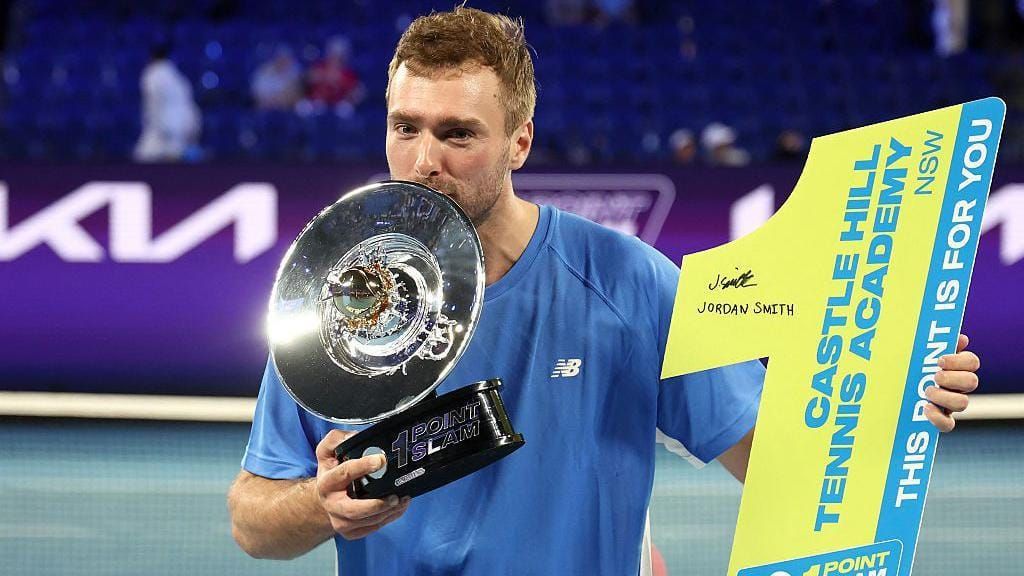
And here’s the part that really matters: it’s not just for the stars. Amateurs get their shot, and sometimes they take it. Jordan Smith’s win last night wasn’t just a headline, it was proof that someone from your local club could walk into Rod Laver Arena, face down a world No. 1, and walk away with life-changing money. Before that million-dollar win in the One Point Slam, Jordan was already the New South Wales state champion and had accrued approximately 10,000 AUD in earnings. Tennis has long been accused of being elitist, but this event flips that narrative. It feels like community. It feels like possibility. It feels like the sport opening its doors.
The timing couldn’t be better either. At the start of the WTA and ATP seasons, players get to shake off the rust, laugh a little, and remember why they fell in love with the game in the first place. For some, it might even bring back memories of being kids dreaming about playing their idols.
Golfer Bryson DeChambeau recently said that growing up, getting to play games against legends like Arnold Palmer shaped him as a competitor and inspired him to give back to golf. That’s exactly the kind of energy the One Point Slam creates. It’s not just entertainment - it’s inspiration. It shows amateurs that greatness isn’t untouchable, and it reminds pros that the joy of the game is bigger than rankings and prize money.
Sure, critics will call it a gimmick. But let’s be honest, sport has always thrived on spectacle. Penalty shootouts, tiebreakers, sudden-death playoffs: fans love them because they’re raw, unpredictable, and unforgettable. The One Point Slam is tennis’s answer to that hunger.
Whether it becomes a permanent fixture in tennis or just a quirky sideshow, it’s already forced tennis to ask itself what it wants to be. Tradition or thrill? Elitist or inclusive? My bet is that the One Point Slam is here to stay, not as a replacement for the Grand Slam, but as its cheeky, adrenaline-fueled cousin. And sometimes, one point really is all you need to change the game.
Jake Scudder
Journalist - topics of tennis