
Behind the Screens: How Signify Protects Tennis from Online Abuse

Who Are Signify Group and What Is Their Connection to Tennis?
In an era where tennis players face as much pressure off the court as on it, a hidden defender has emerged. Signify, a Dutch technology firm best known for its smart lighting systems, is now leading the fight against online abuse through a powerful platform known as Threat Matrix.
From Grand Slams to WTA tour events and ITF tournaments, Signify is working behind the scenes to shield athletes from the growing wave of digital harassment. I only learned about this company in the past few weeks, but it’s important to highlight that someone is stepping up to tackle this escalating threat head-on. So, let’s break it down.
Who Are Signify?
Signify is a global technology company headquartered in Eindhoven, Netherlands. Formerly known as Philips Lighting, it became an independent company and rebranded in 2018. Today, it leads not only in lighting technology, through brands like Philips, Hue, WiZ, and Interact, but also in the emerging field of digital safety.
While most people associate Signify with lighting innovation, its lesser-known division focused on ethical tech and online threat analysis is rapidly gaining prominence, especially through its flagship platform, Threat Matrix.
What Is Threat Matrix?
Threat Matrix is a hybrid AI and human intelligence platform built to detect, analyze, and report online abuse in real time. Originally developed for football clubs and political figures, the system has now expanded into tennis and other global sports.
Key Features:
- AI-powered monitoring of public platforms (X/Twitter, Instagram, TikTok, Facebook, YouTube) in 30–40 languages
- Detection of hate speech, racism, threats, misogyny, and gambling-related abuse
- Human review teams to ensure context and accuracy
- Evidence packages built for clubs, federations, and law enforcement
- Escalation pathways for platform takedowns and legal action
The platform is currently used by organizations such as Premier League football clubs (e.g., Arsenal), World Athletics, the NBA Players Association—and now, major tennis institutions.
2024: A Turning Point for Tennis
In January 2024, Signify launched its most ambitious sports integrity project to date: teaming up with the WTA, ITF, USTA, and AELTC (Wimbledon) to monitor online abuse targeting professional tennis players.
Scope of the Partnership:
- Covers all players across WTA, ITF, and World Tennis Tour events
- Includes Grand Slams such as Wimbledon and the US Open
- Monitors both public content and, with consent, direct messages (DMs)
- Provides 24/7 real-time coverage of multiple platforms
Scale Behind the Screens
Signify operates globally, with over 34,000 employees in more than 70 countries. While exact figures are not public, its Threat Matrix platform runs on a hybrid model, combining cutting-edge AI with a network of multilingual human analysts and threat specialists.
These unsung professionals provide round-the-clock monitoring and contextual review, working continuously to identify and address abusive content swiftly and accurately. While no system is perfect, Threat Matrix has become one of the most advanced and proactive anti-abuse systems in professional sport.
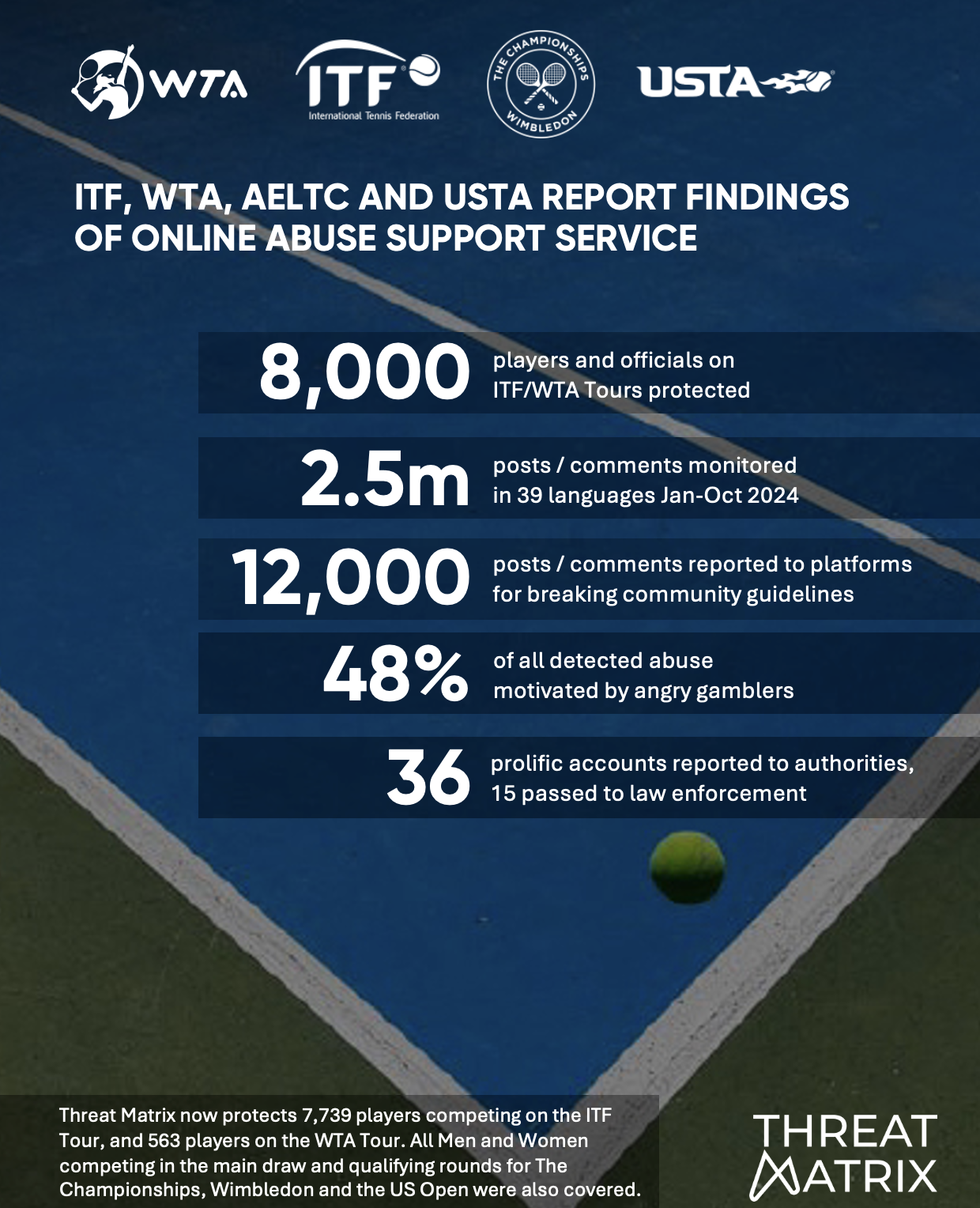
Key Stats (2024–2025)
- 1.6 to 2.4 million posts monitored
- 8,000 abusive messages flagged
- 4,200+ abusive accounts identified
- 12,000+ reports submitted to social media platforms
- 15 cases escalated to law enforcement (3 in the U.S., 12 internationally)
- 458 players received direct abuse
Notably, nearly 40% of all abuse came from angry gamblers and 77% of all direct threats were betting-related, often sent via DMs.
Real Faces Behind the Data
Statistics only tell part of the story. The lived experiences of players bring these numbers to life.
- Emma Raducanu, the 2021 US Open champion, was stalked by a man who appeared courtside in Dubai in 2025. She was forced to hide behind the umpire’s chair in tears. Thanks to improved surveillance, the same man was later blocked from buying Wimbledon tickets. "I probably won’t be the last,” she said. “It’s not just about being an athlete, it’s a broader issue for women.”
- Katie Boulter, British No. 2, received chilling messages during the French Open, including:
- “Candles and a coffin for your entire family”
- “Hope you get cancer "Many of these messages came from disgruntled gamblers. "You really don’t know if this person is on site… or if they know where you live,” she said.
- Priscilla Hon, an Australian pro, has been targeted since her teens. Bettors have called her a “worthless piece of garbage” and wished her dead. "It’s sad that humanity goes down to this level just for losing a bet,” she said.
These are not isolated incidents. They're part of a growing epidemic in the digital lives of players.
From Monitoring to Action
Threat Matrix is more than just passive surveillance - it’s a system designed to empower action.
- Tournaments like Wimbledon and organizations like the WTA have used its data to issue takedown requests
- Repeat abusers have been banned from venues
- Evidence packs have supported criminal investigations, including in collaboration with the FBI
- The system has given players greater confidence to speak out
Why This Matters
The mental health of professional tennis players has come into sharper focus in recent years, thanks in part to courageous voices like Naomi Osaka. Social media abuse isn’t just emotional, it affects safety, performance, and long-term wellbeing.
Signify’s Threat Matrix offers a rare blend of proactive protection and real accountability. Rather than reacting to abuse after it escalates, the platform flags danger early and provides the tools and legal pathways for consequences.
What’s Next?
Signify’s digital safety platform is still evolving. Future developments may include:
- Integration with the ATP Tour
- Real-time moderation of tournament feeds and chat functions
- Education programs for players, agents, and staff
- AI modules trained specifically on tennis and gambling-related abuse
With online betting on the rise and athletes more exposed than ever, digital defense is no longer optional. It is essential.
Final Thoughts from topics of tennis
What Signify and Threat Matrix are doing is more than just content moderation, it’s reshaping the safety net behind the sport.
At topics of tennis, we believe every athlete deserves protection on and off the court. The rise of online abuse, especially tied to gambling culture, isn’t just a social media issue. It’s a performance issue, a safety issue, and a human one.
By investing in digital protection, tennis is sending a clear message: the game is evolving, and so is its defense. Behind every match, there’s now a system working just as hard to protect the person holding the racquet.
Let’s hope that support continues to grow.
Jake Scudder
Journalist – topics of tennis