From Renting to Owning: What the "Wimbledon of the Desert" Really Tells Us About Saudi Arabia's Tennis Strategy
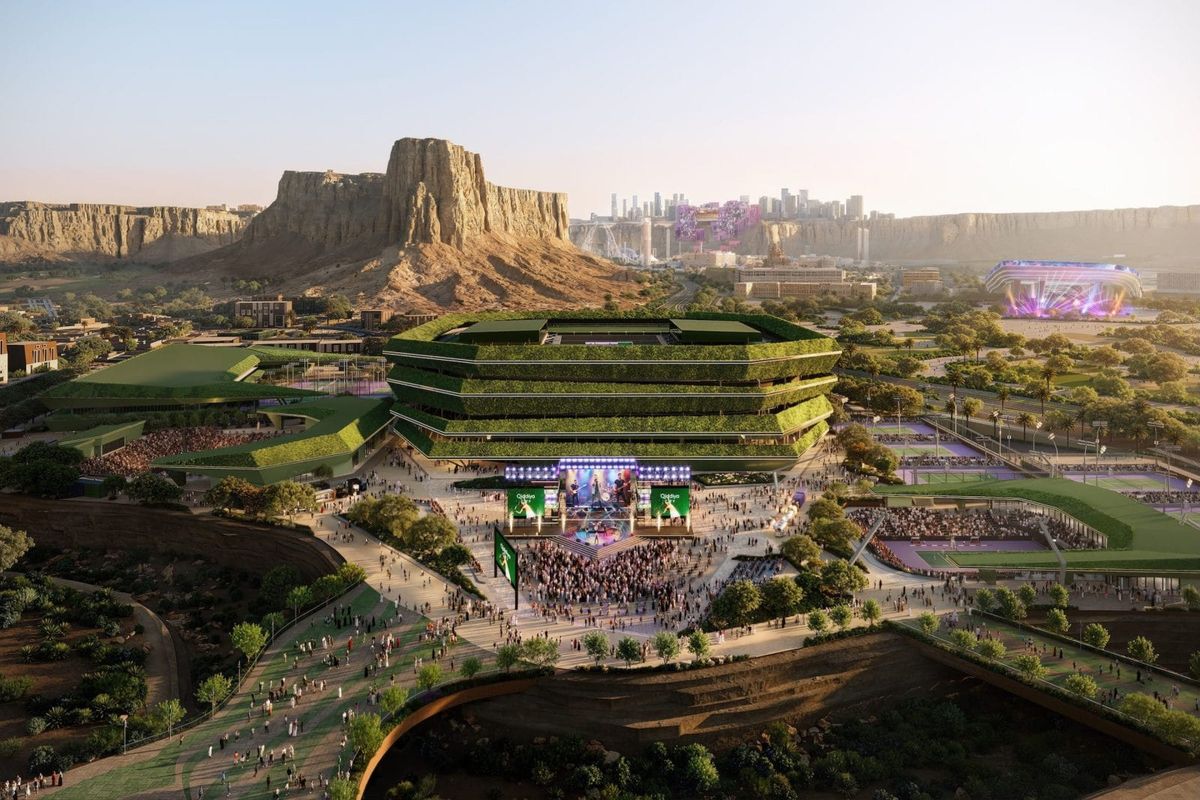
Saudi Arabia just unveiled renderings for a 30-court, 33,000-seat tennis complex in the desert outside Riyadh, and within about 24 hours the internet had already nicknamed it the "Wimbledon of the Desert." Fair enough. The design leans hard on the All England Club's green-and-purple palette, and the 15,000-seat Centre Court is built with a retractable roof clearly modelled on the same engineering logic as SW19's. It's a flattering comparison, and almost certainly an intentional one.
But the more interesting story here isn't architectural. It's strategic. Look closely at the timing of this announcement, and it starts to look less like an arms race move and more like a pivot, from renting tennis's spotlight to owning a permanent piece of its infrastructure.
The Centre, In Numbers
The National Tennis Centre is being built in Qiddiya City, roughly 45km west of Riyadh, as part of the Public Investment Fund-backed Qiddiya megaproject (a $40 billion "city for play" reportedly planned at three times the size of Paris). Designed by Populous, the architecture firm behind a long list of the world's marquee stadiums, the complex will include:
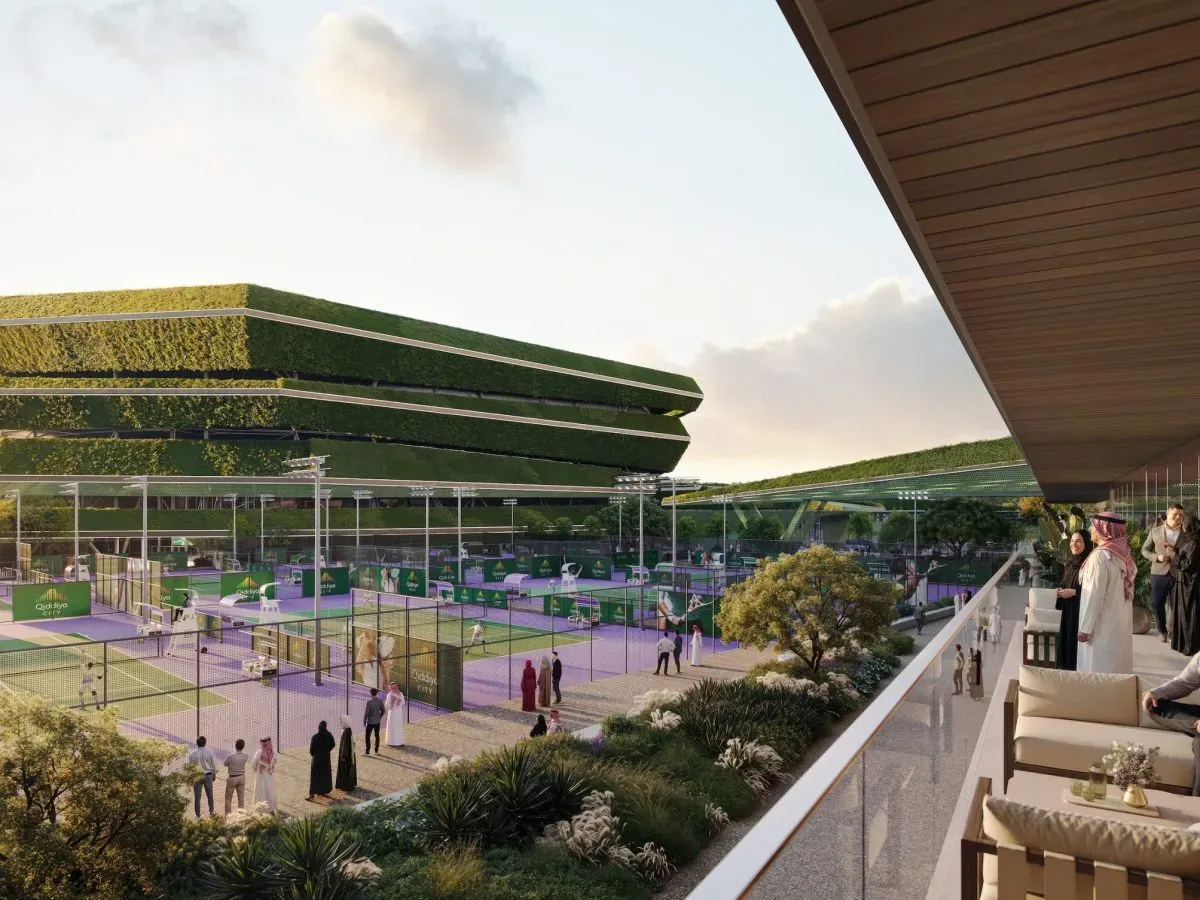
- 30 courts total (28 hard, two clay), built to ATP, WTA and ITF standards
- A 15,000-seat Centre Court with a retractable roof
- An 8,000-seat multi-purpose arena, also roofed
- A 5,000-seat Court One and 2,000-seat Court Two
- Six indoor courts, six additional competition courts, and 14 practice courts
- Athlete recovery zones, hydrotherapy and physiotherapy suites, and dedicated media facilities
It's expected to be operational as early as 2027. Construction is already underway.
Renting vs. Owning
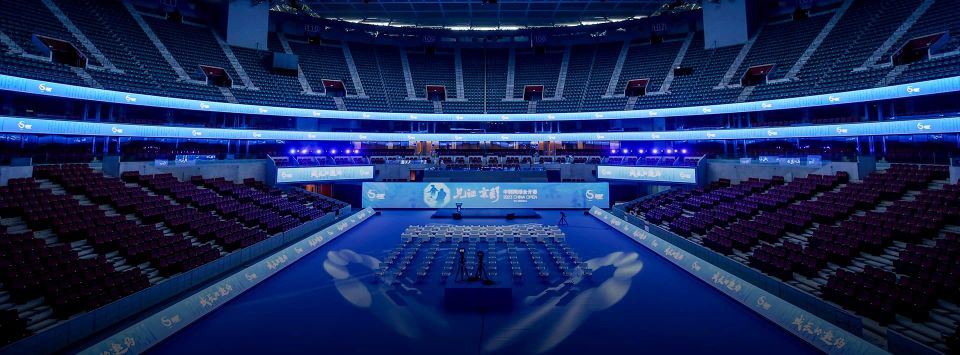
Here's the detail that makes this announcement worth more than a press-release write-up. Every major tennis event Saudi Arabia has hosted so far has been staged in borrowed venues, the ANB Arena or the King Saud University Indoor Arena in Riyadh. Functional spaces, but not purpose-built tennis infrastructure.
And right now, those rented event deals are unwinding. The WTA Finals, hosted in Riyadh since 2024, will leave after this November's edition, with the tour reportedly deciding not to renew. The Next Gen ATP Finals already left Jeddah ahead of its planned five-year run. Reports suggest the Saudis themselves concluded that continuing to fund those one-off hosting deals "did not make financial sense," language that lines up with a broader retreat across the kingdom's sports portfolio, including PIF's decision to end its financial backing of LIV Golf after this season and its sale of a 70% stake in football side Al Hilal.
In other words: the easy-to-exit, headline-grabbing event sponsorships are being wound down. A permanent stadium complex is, by definition, the opposite of easy to exit.
That's the real story buried in this announcement. Saudi Arabia isn't backing away from tennis, it's changing the form of its bet. Rather than continuing to pay annual fees to temporarily host other people's tournaments, it's building an asset it will own regardless of which events come and go, and one that's reportedly expected (though not yet officially confirmed) to host the kingdom's incoming ATP Masters 1000 from 2028. ATP chairman Andrea Gaudenzi has said the calendar slot for that event, possibly February, isn't locked in yet. Worth flagging: even the marquee tournament this building is rumoured to anchor doesn't have a confirmed date.
It's a more sophisticated, more durable version of soft power than buying a tournament's naming rights for three years. Infrastructure doesn't churn.
The Capital Gap
It's tempting to frame this purely as "rich nation builds shiny new toy while the rest of tennis scrapes by," and there's something to that. But the actual numbers complicate a simple villain narrative.
The ATP Challenger Tour, tennis's development circuit, is in genuine growth mode. Total prize money for 2026 will hit a record $32.4 million, up 167% since 2022, and the calendar is expanding from 216 to 265 events. That's real, deliberate investment by the ATP in the sport's middle class, not neglect.
But scale it against what's being built in Qiddiya, and the gap is almost absurd. Total 2026 Challenger prize money across the entire global season (all 265-plus events) is roughly double what a single WTA Finals event paid out in prize money alone last November ($15.5 million). A Challenger title in 2026 might net a player somewhere between $17,000 and the low five figures. ATP 250 first-round losers can out-earn a Challenger champion in a single week.
So this isn't really a story about Saudi money "starving" the lower tiers. The Challenger Tour's growth is real and ongoing regardless of what happens in Riyadh. It's a story about just how lopsided tennis's capital structure remains, even in a moment when multiple stakeholders are genuinely trying to invest in the sport's foundation. One country's single tennis complex represents a multiple of an entire season's development-tier prize pool. That tells you less about Saudi Arabia specifically and more about how concentrated wealth still is at tennis's summit.
The Institutional Stamp
None of this is happening without the sport's governing bodies standing right next to it. ITF chief executive Ross Hutchins called the project the kind of transformative investment the federation has "long championed" for the sport's growth. ATP chief executive Eno Polo described it as a "remarkable addition to the global tennis landscape." Those aren't neutral observations. They're institutional endorsements of a single country's infrastructure build, delivered before a ball has been struck on any of those 30 courts.
That's not necessarily wrong. Quality facilities genuinely do create pathways for players and coaches, and the ITF's argument that the sport needs more of them isn't hollow. But it's also worth asking what those governing bodies get in return for the early praise, and whether the same enthusiasm is extended to facility investment anywhere else in the world, particularly the regions, like South America's "golden swing" circuit, that some reporting suggests could be deprioritised on the calendar to make room for events like this.
The criticism that's followed Saudi Arabia's broader tennis push, from voices like Chris Evert and Martina Navratilova on human rights grounds, hasn't gone away just because this is a building rather than a tournament sponsorship. If anything, a permanent stadium raises the stakes on that debate. It's not a deal that quietly lapses in three years. It's there indefinitely.
Where This Leaves Things
Saudi Arabia isn't slowing its tennis ambitions. It's making them permanent. Whether that's a positive long-term investment in the sport's global footprint or simply a more durable version of the same soft-power strategy probably depends on who you ask. But the shift from renting attention to owning infrastructure is the part of this story that deserves more attention than the renderings are getting. Tennis has spent the last two years debating whether Saudi money is good or bad for the sport. The real question now might be: what happens once that money stops being something the sport can simply choose not to renew?
Jake Scudder
Journalist — topics of tennis