Vondrousova's Four-Year Ban Exposes Tennis's Doping Double Standard
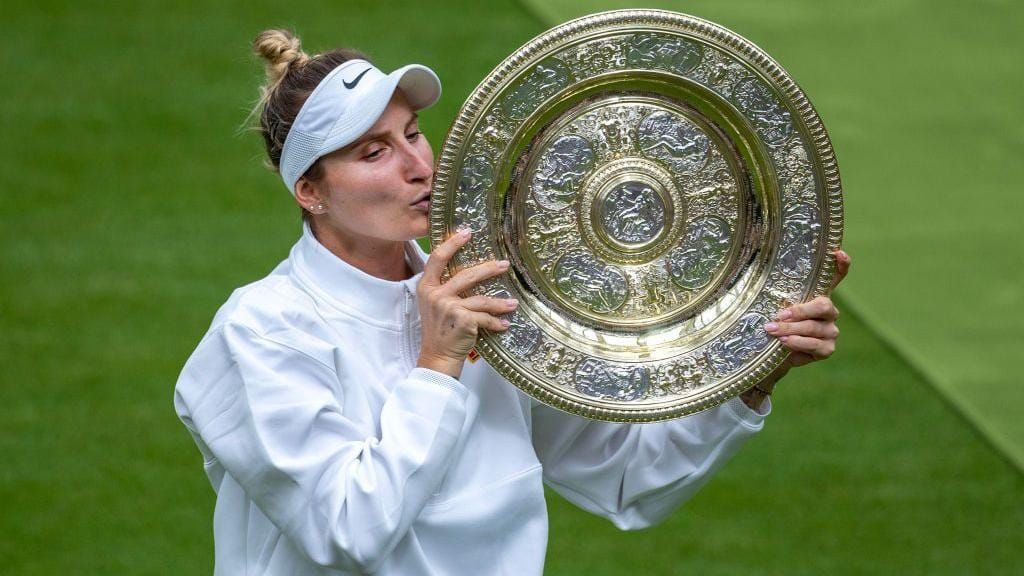
Marketa Vondrousova won Wimbledon in 2023 as the first unseeded woman in the Open Era to do so, a fairytale run that turned a 19-year-old Roland-Garros runner-up into one of the most likeable champions the All England Club has produced this decade. Three years later, on the eve of the tournament that made her, the International Tennis Integrity Agency has handed her a four-year ban that will keep her out of the sport until June 2030, when she turns 30.
The case is not, on its face, a doping case at all. Vondrousova never tested positive for a banned substance. On the evening of December 3, 2025, a Doping Control Officer arrived at her home in Prague for an out-of-competition test and she declined to provide a sample, signing a refusal form instead. Under the World Anti-Doping Code, that distinction barely matters. A refusal carries the same starting sanction as a positive test, by design, because a four-year ban for refusing is the only way to stop an athlete who is doping from simply declining the test and accepting a shorter, more favourable penalty. ITIA chief executive Karen Moorhouse was direct about that logic when she announced the sanction: the system cannot work if a player ends up better off for refusing than they would have been for testing positive.
What makes this case resonate beyond the legal mechanics is Vondrousova's explanation for why she refused, and the timing of its release. She first addressed the incident publicly in April, when the ITIA's charge became known, posting on Instagram that she had reached "a breaking point after months of physical and mental stress" and that the late-night, unannounced nature of the visit triggered a fear response rather than a calculated decision to dodge testing. She pointed to the case of her compatriot Petra Kvitova, the two-time Wimbledon champion who was stabbed by an intruder at her own home in 2016, as the reason she and her team do not take strangers at the door lightly. She said she has experienced years of threatening messages, and that medical experts subsequently diagnosed her with an Acute Stress Reaction and Generalised Anxiety Disorder connected to the episode.
The independent tribunal heard that account, along with testimony from the doping control officer who attempted the test, and concluded there was no compelling justification for the refusal. The ITIA has pushed back specifically on the suggestion that identification was the issue, with Moorhouse noting that all testers are trained, carry ID, and are matched to the player's gender, while players can independently verify a tester's identity if they have doubts. It is also worth noting, for context the ITIA has been careful to include, that the tester arrived within the rules governing surprise testing outside an athlete's nominated hour, and that no sanction would have applied had Vondrousova simply not been home.
Where this becomes a governance story, and not just a personal one, is in the comparison tennis fans have been quick to draw. Jannik Sinner accepted a three-month ban after a positive test, reached via a settlement with WADA. Iga Swiatek accepted one month. Simona Halep's case, while more complicated, also ended in a result short of years. All three were found not to bear full responsibility for their positive results. Vondrousova, who never tested positive for anything, has now received a ban four to forty times longer than two of the sport's biggest recent names. The optics are jarring even if the rulebook logic is defensible, and it is exactly the kind of inconsistency that fuels the perception among players that the anti-doping system punishes process violations more severely than substances themselves.
The player reaction has been swift. Eva Lys called the ban "completely insane" on social media, and the broader response among fans has leaned heavily in Vondrousova's favour, with many drawing the Sinner and Swiatek comparisons unprompted. Her lawyer, Jan Exner, has said she has asked him not to comment further until the full written decision is released and they have decided whether to pursue an appeal to the Court of Arbitration for Sport, an avenue available to her, the ITIA, and the Czech anti-doping authority.
There is a separate, quieter story here about timing that is easy to miss. Vondrousova has not competed since withdrawing from the Adelaide International in January with a shoulder injury, meaning the ban's practical effect on her playing career is, for now, layered on top of an already uncertain physical situation. Whether four years becomes the final word will depend on whatever CAS makes of the same facts the tribunal just weighed: a stress response with documented psychiatric backing, set against a doping framework that was built, deliberately, to leave no safer option than compliance.
Jake Scudder
Journalist — topics of tennis