From the NRL to the Net: Andrew Abdo Takes the Helm at Tennis Australia
In Australian sport, leadership transitions rarely go unnoticed.
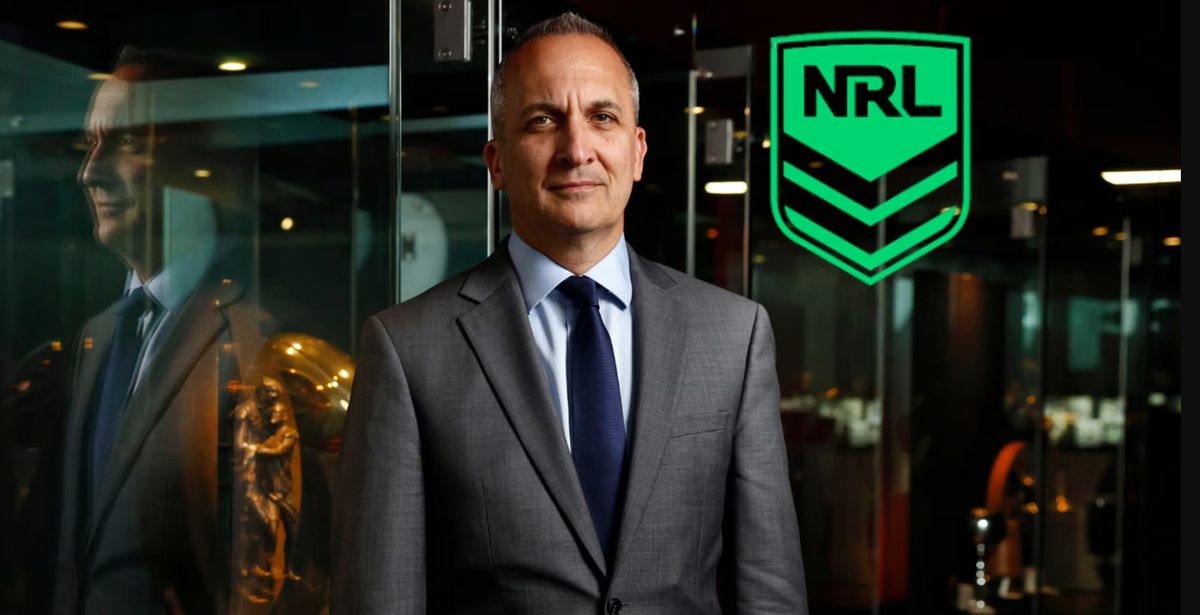
But when the CEO of the NRL, one of the country’s most powerful sporting competitions, walks away to run Tennis Australia, it signals something significant about where the sport is headed.
On Monday 25 May 2026, Tennis Australia confirmed that Andrew Abdo will succeed Craig Tiley as Chief Executive Officer, concluding an extensive global search. Abdo will officially take up the role in August 2026, relocating to Melbourne after nearly seven years leading the NRL through one of the most turbulent and transformative periods in the competition’s history.
A Familiar Story: South African Roots, Australian Sport
There is a striking parallel at the heart of this appointment. Like Craig Tiley before him, Andrew Abdo was born in South Africa. Both men built their careers in Australia, rising to lead major sporting organisations in a country that adopted them. It is a coincidence worth noting, and perhaps a reflection of the global talent pool Tennis Australia was willing to draw from in finding its next leader.
Abdo joined the NRL in 2013 as Chief Commercial Officer, becoming CEO in September 2020. During his tenure he navigated the competition through the COVID‑19 pandemic, oversaw significant broadcast negotiations, and expanded the NRL’s commercial footprint. NRL Chairman Peter V’landys described his departure in terms that spoke volumes: “I said when he was appointed that he would be the best NRL CEO ever, and he has been.”
What Abdo Inherits
The timing of this appointment matters. Craig Tiley leaves Tennis Australia in exceptional shape. The Australian Open drew more than 1.3 million fans in 2026, generates nearly $3.5 billion for Victoria over a decade, and is widely regarded as the most fan‑friendly Grand Slam on the calendar. The Happy Slam is not broken; it is thriving.
But as Australian tennis great Pat Cash was quick to point out, the AO’s commercial success tells only part of the story. Cash urged Abdo to look beyond the fortnight in Melbourne and focus on the “49 other weeks of the year,” a pointed reference to the ongoing challenge of developing elite Australian players and strengthening grassroots pathways across the country.
It is a fair challenge. For all of Tiley’s achievements in growing participation—tennis became the second most played sport in Australia under his watch—the pipeline of Australian players competing at the elite level remains a persistent concern. Abdo now inherits both the triumph of the AO and the unfinished business of player development.
A Commercial Mind in a Tennis World
The appointment of a commercial executive from rugby league will inevitably invite scrutiny from the tennis community. Abdo has no background in tennis administration specifically, and his appointment represents a departure from the sport‑first model that Tiley embodied.
But there is another way to read it. Tennis Australia is not merely a sporting body; it is the custodian of one of the world’s great sporting events, a commercial enterprise generating billions, and a national participation organisation simultaneously. The skills required to run it have as much to do with media rights, sponsorship strategy, and stakeholder management as they do with understanding a tiebreak.
In that context, Abdo’s track record at the NRL—where he grew the competition’s commercial revenues, modernised its media strategy, and steered it through crisis—is directly relevant.
Looking Ahead
Abdo himself set the tone clearly upon his appointment: “Tennis Australia has a unique role in Australian sport. The Australian Open is already one of the leading sporting events in the world. The opportunity is to keep evolving it, as a global event, as a fan experience, and as a platform that brings more people into the sport.”
The language of evolution rather than revolution is deliberate and reassuring. He is not walking into a burning building. He is inheriting an institution at the peak of its powers, and being asked to take it further.
Whether a commercial executive from rugby league can earn the trust of the tennis community, strengthen grassroots pathways, and keep the Happy Slam growing in an increasingly competitive global sports landscape remains to be seen.
What is certain is that Australian tennis enters a new chapter. Craig Tiley built the foundation. Andrew Abdo now has the keys.
Jake Scudder
Journalist – topics of tennis